
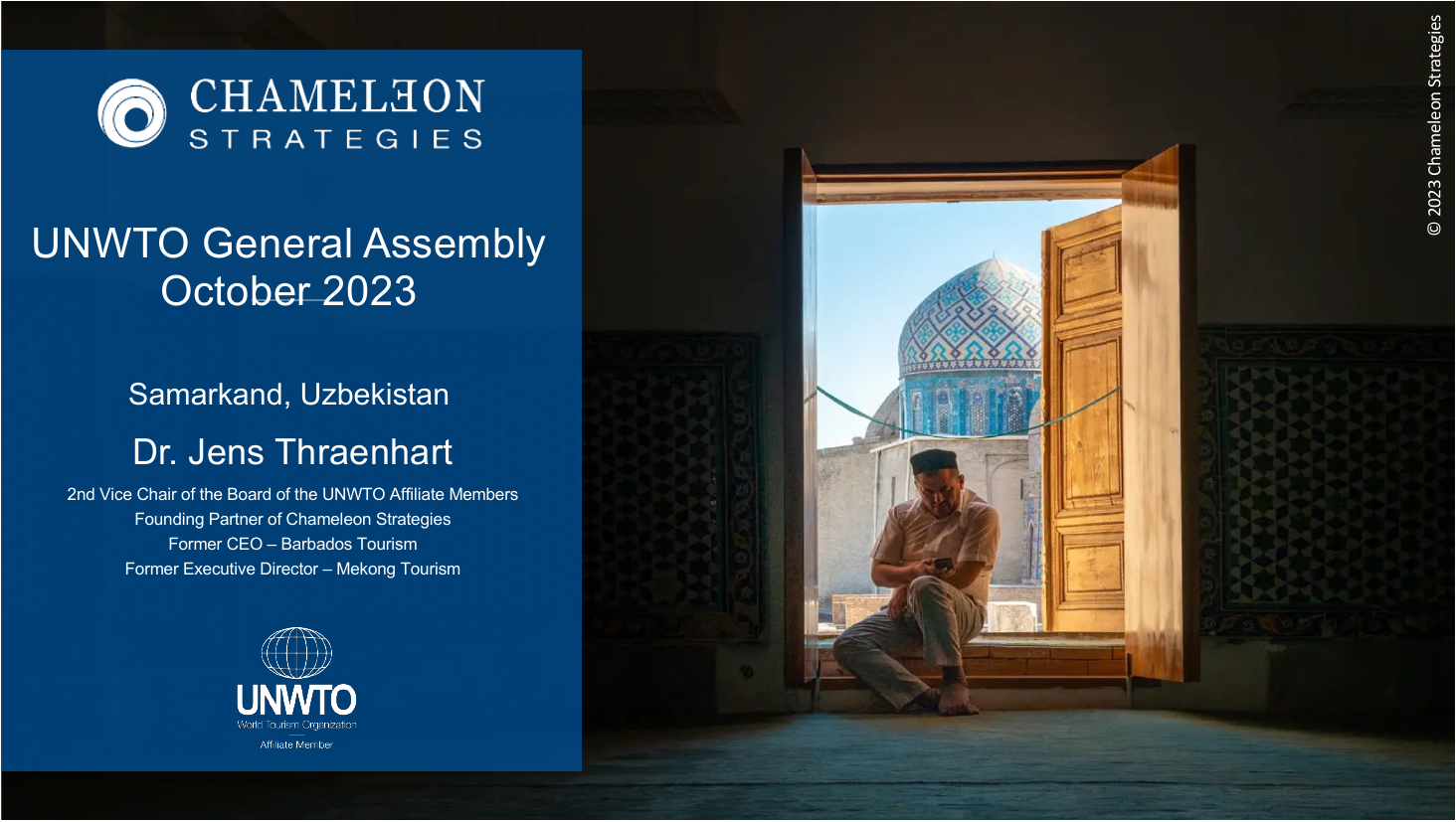
The organization was known as UNWTO at the time of the event. Its Affiliate Members met in Samarkand under the theme of enhancing tourism through public-private cooperation. That is the wider institutional context for this presentation, not confirmation of a specific session or speaking time. Source
Give the journey a reason to exist
The deck defines multi-destination tourism as cooperation between destinations or countries around their combined assets and attractions. Start with the traveler’s reason for making the journey: heritage, food, nature, pilgrimage or another specific interest. A line on a map does not establish demand.
The proposed planning process includes demand analysis, infrastructure and social-value assessments, followed by a clear theme. Check whether the stops complement one another, whether the time and cost are reasonable and whether hosts want to participate. This is a planning framework, not a forecast of extra arrivals or spending.
Make the connections work
In the Caribbean framework, the presentation proposes better transport infrastructure, maritime connections and air services, alongside simpler visa and immigration processes. These are recommendations. The slides do not establish that a regional visa, shared border system or new route had been implemented.
Jamaica’s Ministry of Tourism reported discussions with the Cayman Islands in August 2022 covering multi-destination tourism, airlift and border protocols. That is evidence of a cooperation agenda, not proof of a finished multi-country product. For any itinerary sold today, verify current entry rules, schedules, transfer times and responsibility when a connection fails. Source
Agree who decides and who pays
A corridor brings together organizations with different mandates, budgets and working methods. The presentation proposes a governance structure, clear objectives, stakeholder collaboration and a way to monitor performance. Decide who owns the work, how decisions are made and how disagreements will be resolved.
Funding needs to cover more than the launch campaign. Coordination, training, information, maintenance and measurement all need resources. The deck identifies public and private funding, development partners and regional institutions as possible sources. These are funding options, not announced commitments.
UN Tourism’s account of the Affiliate Members meeting records its public-private cooperation theme. That supports the institutional context, while the specific corridor arrangements in this briefing remain Jens’s recommendations. Source
Learn from the Mekong region
The presentation’s main regional case is the Greater Mekong Subregion. It uses the GMS Tourism Sector Strategy 2016–2025 and a set of themed corridors to illustrate how countries can connect their tourism assets while keeping distinct national and local identities.
Examples in the slides include the Southern Coastal Corridor, Northern Heritage Trail and Mekong river journeys. They are historical planning examples, not current bookable routes or assurances that every border crossing remains open. Their practical lesson is to examine the experience, transport and services together.
The deck also describes the Experience Mekong Collection and Showcases as ways to build capacity through responsible small-business examples. A regional brand needs enterprises that can deliver the promised journey. Peer learning and local participation belong in product development, not only in the communications plan. Source Source Source
Keep local businesses in the journey
The talk’s stakeholder framework calls for public-private participation, training partnerships and knowledge exchange. Workshops, field visits and practical handbooks are proposed ways to help operators meet shared standards without requiring every place to offer the same experience.
My recommendation is to agree how local guides, accommodation providers, food businesses and cultural practitioners participate and get paid. Ask residents which places and practices should remain private, what visitor pressures they can accept and how they want their destination represented.
Measure the corridor, not just its publicity
The presentation’s measurement framework goes beyond visitor numbers. It includes length of stay and spending, marketing performance, organizational effectiveness, visitor and industry feedback, resident quality of life, local purchasing and environmental pressures.
These are proposed measures, not reported results from this talk. Establish a baseline and agree what success means for each participating destination. A regional total can hide uneven benefit, so examine where nights, spending, work and operating pressures actually occur.
- 01The visitor journey
Review access, transfers, services, length of stay and the promises made in the itinerary.
- 02Benefit by destination
Track local purchasing and where visitor spending and paid work occur, not just a regional total.
- 03Residents and resources
Collect resident feedback and examine water, energy and waste pressures alongside commercial results.