Start with why
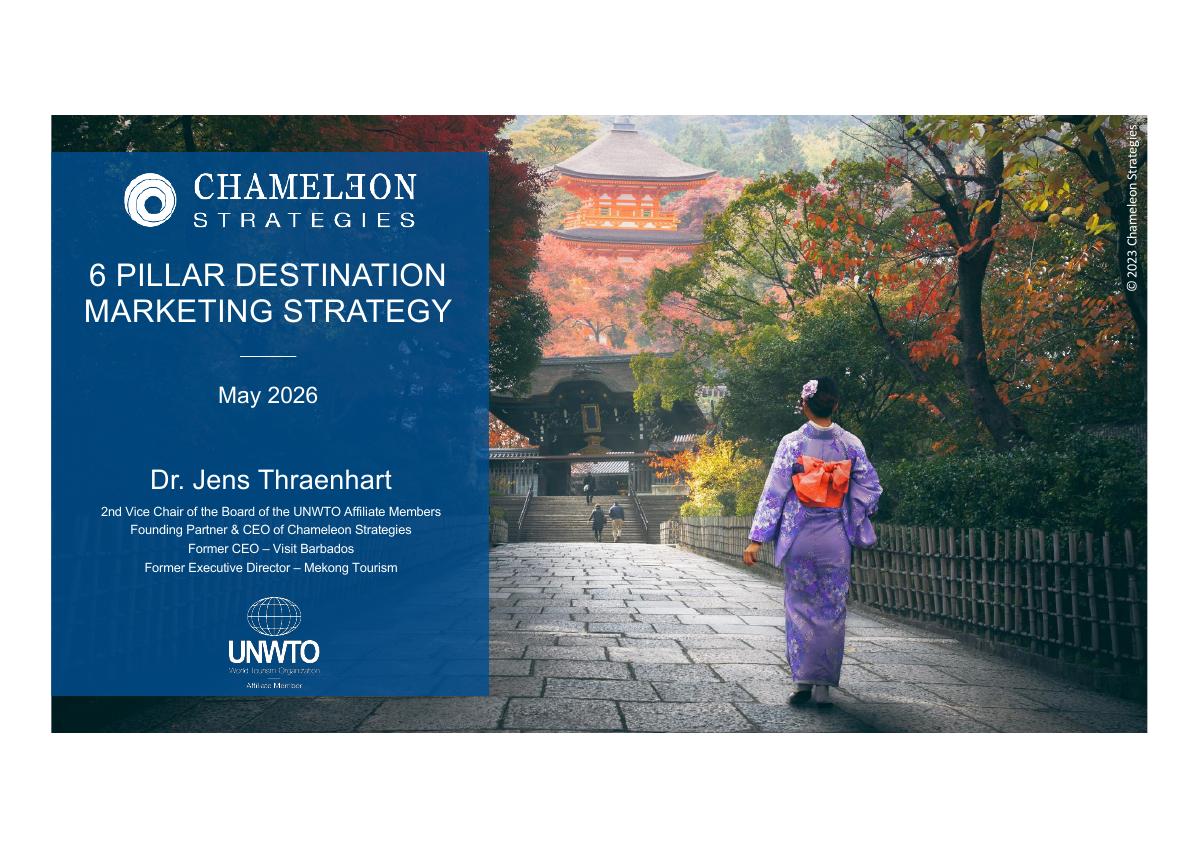
A destination brand is not simply a logo or campaign. The slides describe it as a reputation: what people at home and abroad associate with the place, what makes it distinctive and what they remember. Before a tourism board buys attention, it should be able to answer a harder question: why does this place want visitors? Presentation, slides 4–15 ↗
Tourism can create jobs and economic activity, but that is not the only test. The presentation argues that a place worth living in can also be a place worth visiting. Resident quality of life belongs in the strategy itself, not in a closing paragraph on sustainability. Planet Happiness offers one approach to measuring resident well-being. Source
Empower the people who make the place
The deck puts travelers, residents and businesses in the same frame. Its stated purpose is to judge a destination by its positive impact and to place quality of life and well-being at the center. That changes who gets heard while a strategy is written: residents and local operators need a say before a promotional promise is made on their behalf. Presentation, slides 16–17 ↗ Source
Build communities, not just itineraries
Tourism spending travels through a long chain of guides, restaurants, artisans, transport providers and other small businesses. The slides call for including that wider network rather than concentrating every opportunity in a few large operators. Social enterprises and public-private partnerships are presented as ways to build capacity. Presentation, slides 18–25 ↗
The Experience Mekong Collection ↗ appears in the deck as an example of giving smaller local enterprises visibility. It illustrates the approach, not a measured economic outcome for every participating business. Source
Protect what people came to experience
The natural and built environments are not backdrops for marketing. They are assets on which both daily life and the visitor economy depend. The slides frame their preservation and improvement as part of destination strategy. A campaign that increases arrivals while degrading a place's resources would undermine its own offer. Presentation, slides 26–27 ↗ Source
Let the place tell its stories
The deck argues that storytelling carries more meaning than a stream of generic promotional posts. It suggests making room for residents and visitors to share their own experiences, including moments of achievement, pride and practical help. The point is not to script a single message for everyone. It is to give real experiences room to travel through the communities that care about them. Presentation, slides 28–31 ↗
Give people a reason to advocate
A repeat visitor might recommend a place; a local operator might introduce it to a new audience. The final pillar looks at how relationships can continue beyond a paid campaign. The slides propose affiliate programs and community-building as possible ways to share the work of promotion. The claimed cost benefit is a strategic proposition in the deck, not a quantified saving demonstrated by these slides. Presentation, slides 32–33 ↗
- 01Write the purpose.
What should tourism improve for residents?
- 02Trace the benefits.
Which businesses and neighborhoods receive visitor spending?
- 03Check the costs.
What must be protected as demand grows?
- 04Earn the recommendation.
Why would someone who knows the place tell another person to visit?