
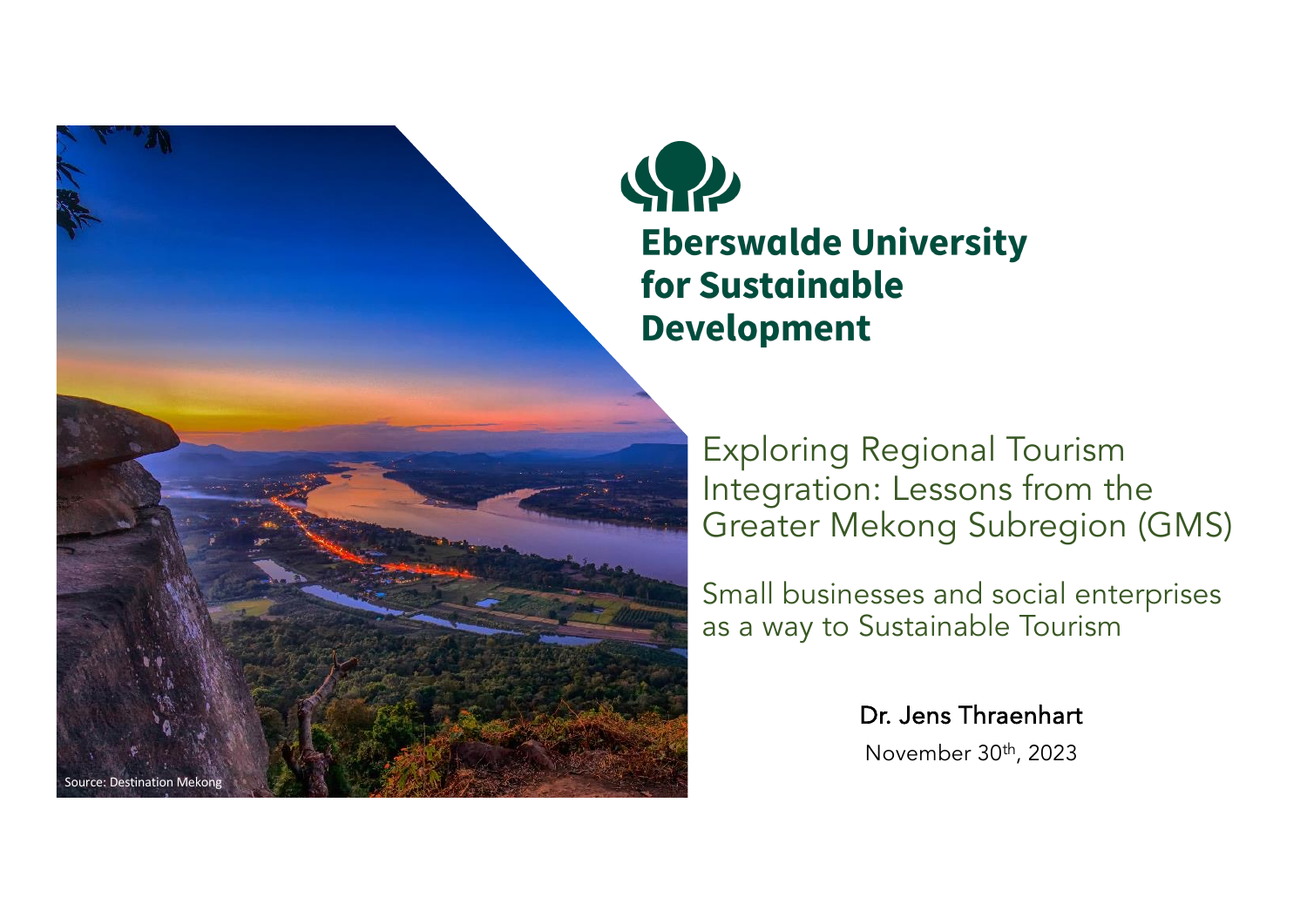
The lecture combines multi-destination planning with historical Mekong tourism strategy, a public-private partnership model and enterprise case studies. Its older statistics, route maps and organizational diagrams describe their cited periods, not today’s market or travel conditions. Source
Connect complementary experiences
The lecture defines multi-destination tourism as cooperation around the combined assets and attractions of different places. Its potential benefits include a broader product offer and better use of resources. These are possibilities to investigate, not results guaranteed by combining destinations.
Start with demand, infrastructure, social value and a clear theme. The presentation places those assessments before branding and promotion. A heritage, food or nature journey needs practical connections and a reason for travelers to make the additional stops.
Read the regional strategy as a whole
The GMS Tourism Sector Strategy 2016–2025 brought together human-resource development, infrastructure, visitor experiences and services, marketing, and regional travel facilitation. The lecture uses those directions to show why integration involves more than destination promotion.
Its themed routes include the Southern Coastal Corridor, Northern Heritage Trail and Mekong river journeys. These are historical strategy examples, with some segments explicitly proposed. They are not current bookable itineraries or assurances about border access, safety or transport services. Source Source
Give partners distinct responsibilities
The partnership diagram distinguishes the roles of industry, Destination Mekong, advisory representatives, the Mekong Tourism Coordinating Office, government tourism officials and development organizations. The lecture presents this as a structure for operating, managing, advising, coordinating, endorsing and supporting regional work.
The diagram is attributed to 2021. It should not be read as a current organizational chart or an announcement of funding. Its practical lesson is to establish who makes decisions, who delivers services and who supplies resources before launching a shared programme.
Capacity building belongs in that arrangement. The slides propose training partnerships, interactive workshops, handbooks, roundtables and field visits. A shared standard should help enterprises deliver reliably without making every destination’s experience identical. Source
Make small enterprises part of regional integration
The Experience Mekong Collection is the lecture’s central network example. It brings attention to responsible tourism businesses while giving other operators practical models to examine. The slides connect it with case-study work undertaken with Mahidol University.
Examples shown include Inle Heritage, Bivou Lodge, Bambu Stage and Ock Pop Tok. They illustrate different business models, not a single formula for sustainable tourism. The historical collection totals in the presentation are not repeated here as current membership figures.
A regional initiative should help participating enterprises reach customers, learn from peers and sustain their work. Visibility alone does not establish local benefit. Examine ownership, purchasing relationships, payment terms and the people involved in decisions. Source
Phare: connect the performance to its purpose
Phare, The Cambodian Circus is a named case in this lecture. The presentation connects the visitor attraction with education, professional skills and employment, and uses it to consider the contribution a social enterprise can make to regional tourism strategy.
Phare’s own account explains how performance, refreshment and merchandise revenue supports free education and arts training through Phare Ponleu Selpak. This describes its stated enterprise model, not an independent audit of impact. The numerical case scores in the slides are not reproduced as verified performance results.
For destination partners, the commercial relationship matters: include enterprises in ordinary purchasing, agree fair terms and check what the payment supports. A social mission is not a substitute for a viable business or evidence of the benefit claimed. Source
Bring the discussion back to community well-being
The lecture’s discussion asks how social enterprises can create meaningful visitor experiences while contributing to sustainable regional integration. No audience responses have been supplied, so this page preserves the question rather than attributing conclusions to participants.
The concluding model distinguishes public-sector economic development, private-sector profitability and the destination-management role of a tourism partnership. It connects policy, operations and stakeholder engagement with resilience, sustainability and community well-being.
Those are objectives to examine. Ask where income and paid work occur, how cultural and environmental assets are protected, and what residents think of the changes tourism brings. A regional total can conceal uneven costs and benefits across destinations.