More than a headcount
Visitor numbers and ticket sales tell only part of an event’s story. The High-Yield Tourism framework in the presentation separates financial yield for the operator, economic yield for jobs and local activity, and sustainable yield for the social and environmental effects alongside the money. Source
Those measures answer different questions. A sold-out program may make financial sense while sending most spending outside the destination. A locally hosted program might distribute income more widely, but still need care around waste and pressure on residents. The point is to ask whose return is being counted, and who is absent from the calculation.
Revenue and profitability for the event and participating businesses.
Work, purchasing and added value across the destination.
Effects on residents, culture and the natural environment, as well as the economy.
Participation changes the event
In the talk, the shift from passive attendance to active participation is practical, not rhetorical. Local people can host sessions, show their craft, run meals and take part in the discussion. Guests meet the destination through people who live there, rather than through a staged version of it.
That also changes the brief for an organizer. Choose venues that give delegates a reason to walk through the town. Buy from local businesses where possible. Make room for residents and smaller operators to speak, not only sponsors and headline guests. These are design choices, not automatic outcomes of holding an event.
A forum spread across Luang Prabang
The 2017 Mekong Tourism Forum ran from 5 to 9 June in Luang Prabang, Lao PDR, under the theme “Prosper with Purpose.” UN Tourism reported that nearly 400 tourism professionals took part and described its decentralised model as a showcase for industry collaboration. Source
Instead of holding every conversation in one conference room, thematic sessions took place around town. The presentation describes 16 sessions with local hosts, lunches from small businesses, and dinners in local restaurants rather than a single gala buffet. The venue choices turned the town into part of the program. The slide deck records the format; UN Tourism independently describes the decentralised approach. Source Presentation, pages 19–21 ↗
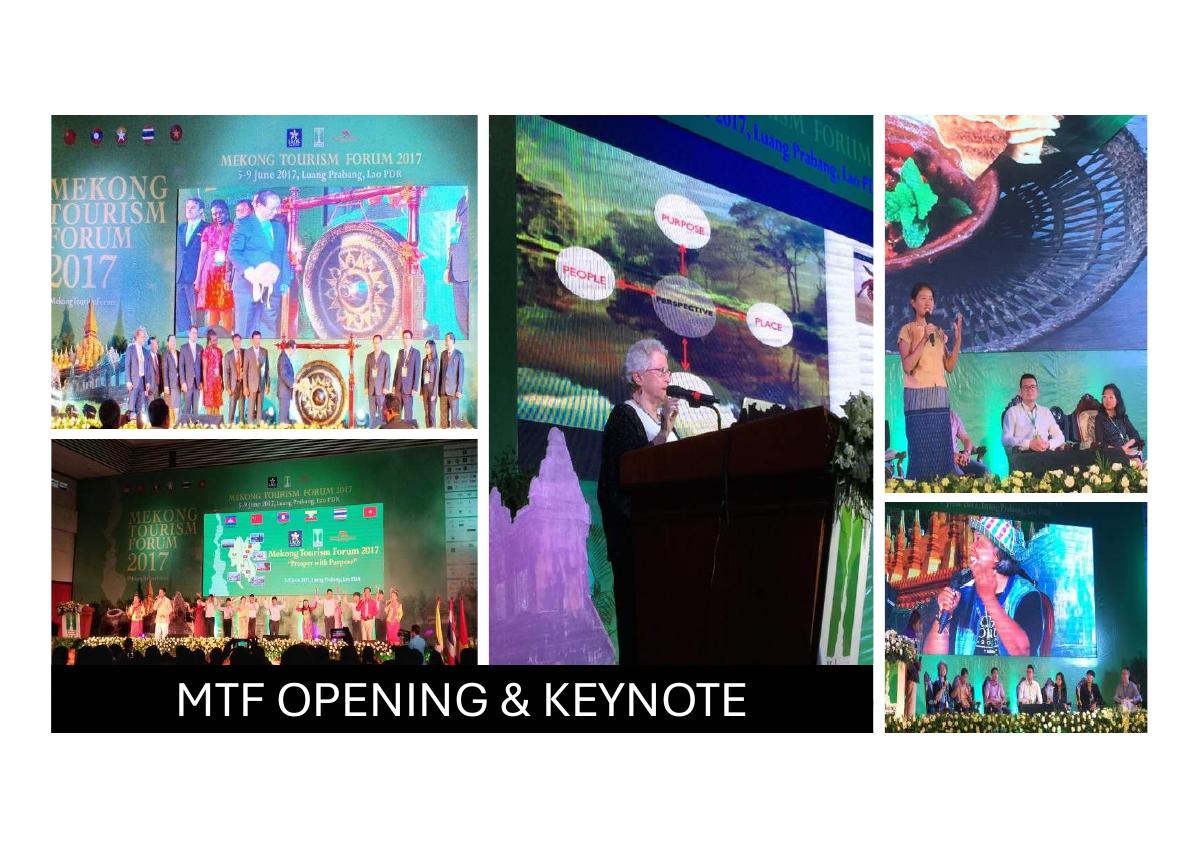 MEKONG TOURISM FORUM 2017 · LUANG PRABANG · FROM THE PRESENTATION
There is a distinction between intent and evidence. The presentation argues that these choices kept more activity local; it does not provide an independently audited total for local spending. What is documented is the format and its later recognition: the Greater Mekong Subregion reported that UN Tourism included the forum among its inclusive tourism case studies. Source
What should remain when the event ends?
The case suggests four questions for any destination considering a festival, fair or conference. Do the program and venues reflect the place? Can residents and businesses help make it? Are guests taking part rather than only watching? And what will the organizer measure after everyone goes home?
- 01Let the place lead.
Build the program around local stories and spaces, rather than importing a format unchanged.
- 02Pay attention to who benefits.
Track local suppliers, paid participation and repeat opportunities, not just visitor totals.
- 03Invite participation.
Give community members a role as hosts and contributors, with control over how their work is presented.
- 04Measure the legacy honestly.
Include economic, social and environmental effects. Do not claim a lasting impact without following it up.
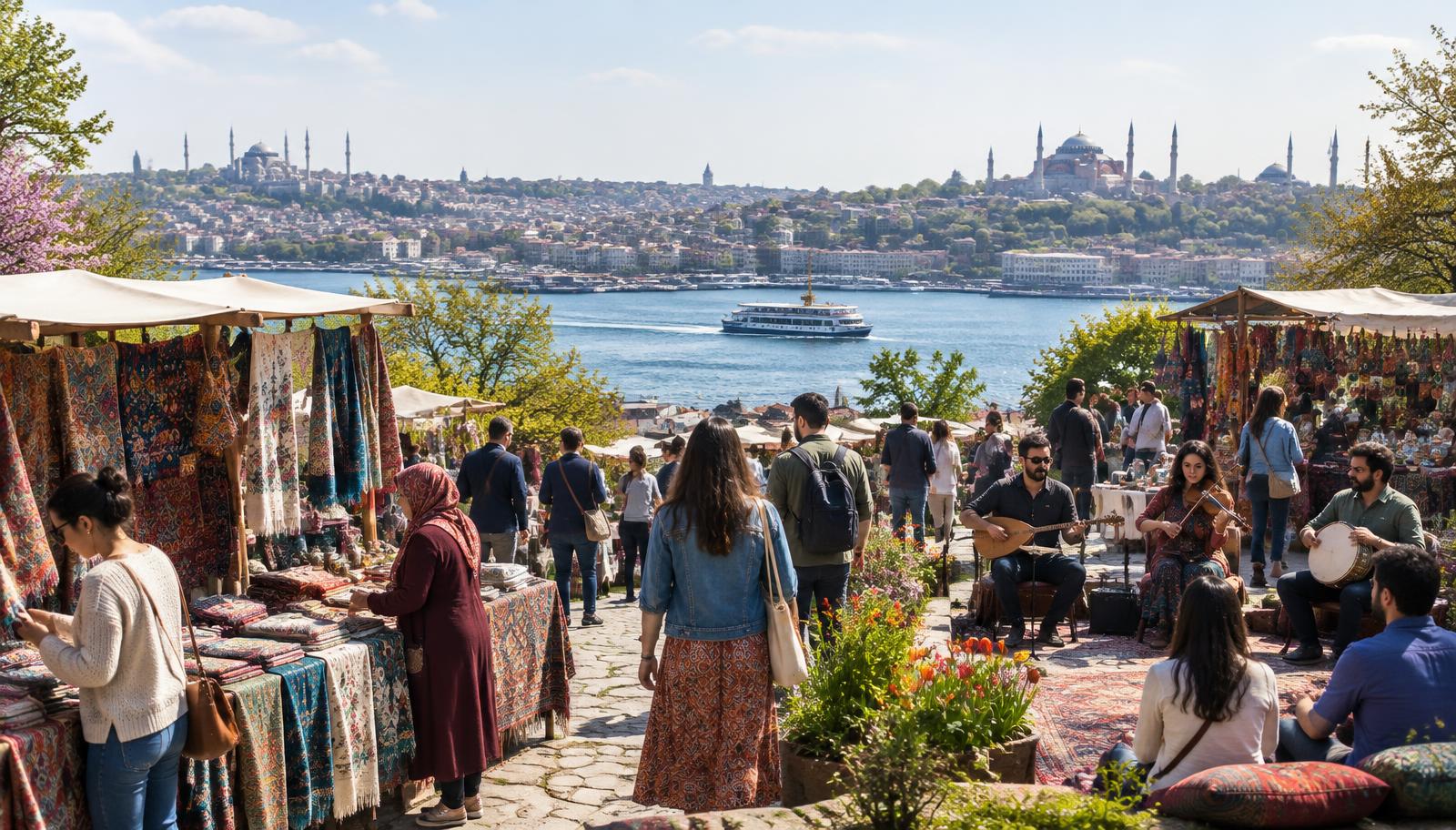
The Colors of the World Expo put culture, food, festivals and live performance on the same program in Istanbul. Its own materials describe exhibitions, gastronomy, stage performances and panels. Whether that promise becomes a lasting benefit depends on what participants and host communities gain after the event. Source